
- 70%+ faster to publicationJulius Kühn-Institut, conference proceedings
- 5 journals, one workflowGöttingen University Press, across Law, Social Sciences and the Humanities
- A better experience for authorsOne shared document, no email ping-pong.
Bring production back to one source
Every handoff needs checking. For a small editorial team, that checking becomes part of production. Automated conversion and typesetting remove manual steps. But automation needs proof: what changed, who changed it, and whether the author's words stayed intact.
Clean room
Every change is labeled, every step is verified.
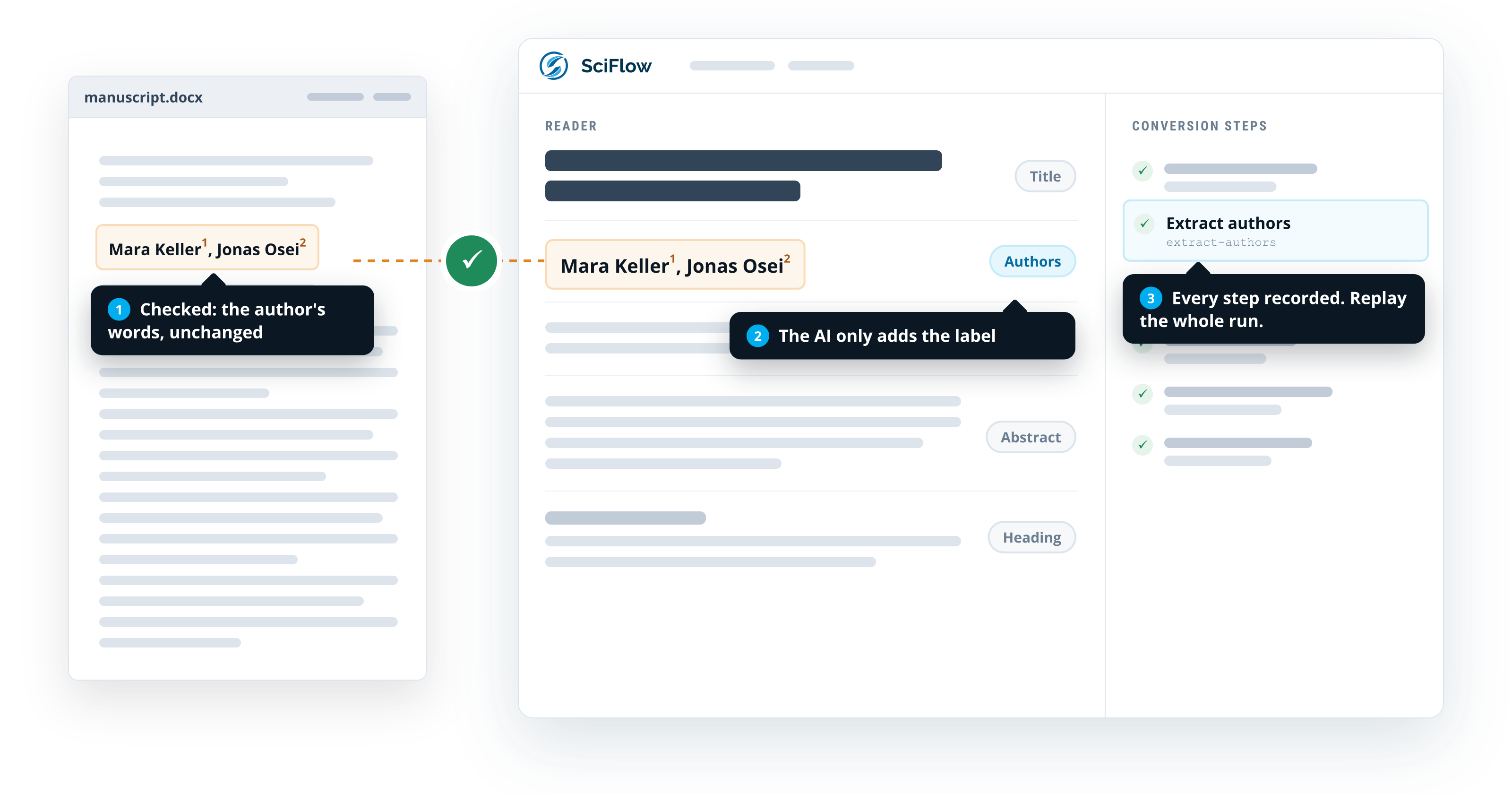
SciFlow's clean room lets AI recover a manuscript's structure without ever writing its text. The model may only propose a fixed set of steps, such as marking the abstract, identifying authors or promoting a heading. Every step is recorded with the manuscript before and after, so your editors can replay the whole run. A final check confirms that no model-generated wording entered the text.
Publish accessible formats from one source
Produce JATS and BITS XML, PDF, HTML, EPUB, and LaTeX from one structured manuscript. Edit the source in the browser, then generate the formats your journal or book needs. Journal and book templates apply your publication's specifications, so the same content can take the form your readers and publishing systems require.
Accessibility starts with that structure. SciFlow produces PDF/UA and WCAG-conformant HTML from semantic elements, including headings, lists, tables, and references. The structure helps readers using assistive technology navigate the publication and understand how its parts relate. Accessible output is built into production, rather than left as a repair job after typesetting. Your publication can retain its own layout while giving readers more ways to access and use the research.
Enhance OJS. Connect your production.
If your journal runs on Open Journal Systems (OJS), SciFlow supplies structured production output for that workflow. Prepare the manuscript in SciFlow and pass the resulting publication files into your OJS-based journal. You can keep the system your editorial team already uses.
For publishers with an established production stack, the converter, editor, and typesetting components can connect through API or XML interfaces. Choose the parts your workflow needs. Integration starts with your existing inputs, required outputs, and publication specifications; it does not require replacing the whole workflow. Whether you publish a Diamond Open Access journal or a book series, the starting point is the production work you need to complete.
Check references inside the editor
Run reference checks with Grounded AI where the manuscript is already structured: inside the SciFlow editor. The checks work with the document your team is preparing for publication, so findings sit within the editorial workflow.
Your editors decide what to act on. Findings are advisory; they do not automatically block publication or make editorial decisions. Your team can examine the flagged references in context and determine whether a correction is needed before producing the publication files from the same manuscript.
Reduce the manual work between manuscript and publication

Typesetting
Apply your publication's template to format the manuscript, replacing repeated manual layout work.
Word conversion
Recover structure from Word manuscripts and continue editing in the browser, without rebuilding the document in an XML editor.

Tables, figures, and equations
Keep tables, figures, and LaTeX/MathJax equations within the manuscript, reducing the need to manage these elements separately.

Enrichment without XML editing
Add metadata, glossary entries, and links in the editor without switching to a separate XML editing tool.
API and XML integration
Connect production components to your workflow through API or XML interfaces, reducing manual transfers between tools.

Template gallery
Inspect curated journal layouts before choosing a template, so you can assess the output without designing a layout from scratch.
Typesetting
Apply your publication's template to format the manuscript, replacing repeated manual layout work.
Word conversion
Recover structure from Word manuscripts and continue editing in the browser, without rebuilding the document in an XML editor.
Tables, figures, and equations
Keep tables, figures, and LaTeX/MathJax equations within the manuscript, reducing the need to manage these elements separately.
Enrichment without XML editing
Add metadata, glossary entries, and links in the editor without switching to a separate XML editing tool.
API and XML integration
Connect production components to your workflow through API or XML interfaces, reducing manual transfers between tools.
Template gallery
Inspect curated journal layouts before choosing a template, so you can assess the output without designing a layout from scratch.
See how publishing teams use SciFlow
Julius Kühn-Institut
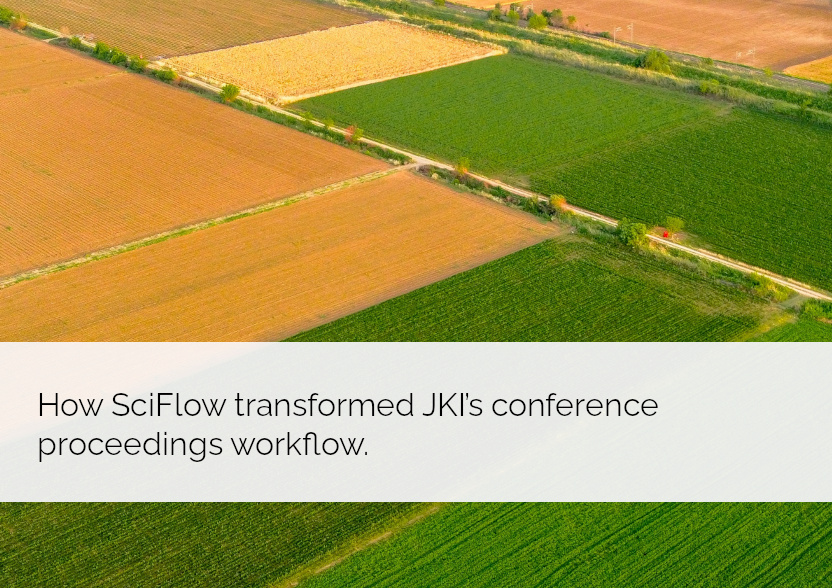
For its conference proceedings, Julius Kühn-Institut automated the processing of 600+ submissions and reduced publication time by more than 70%, using bulk editing and API integration.
Request the JKI case study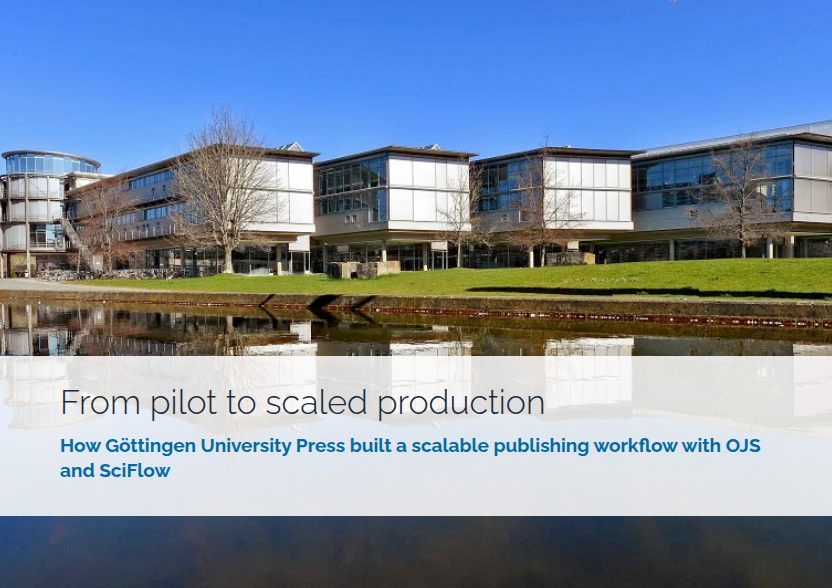
Göttingen University Press
Göttingen University Press started with a pilot for the New American Studies Journal. Today, five journals across Law, Social Sciences and the Humanities run on the same workflow, with OJS-ready PDF, HTML and XML in a few clicks.
Request the Göttingen case studySciFlow Publish Enterprise
Integrate the production components you need
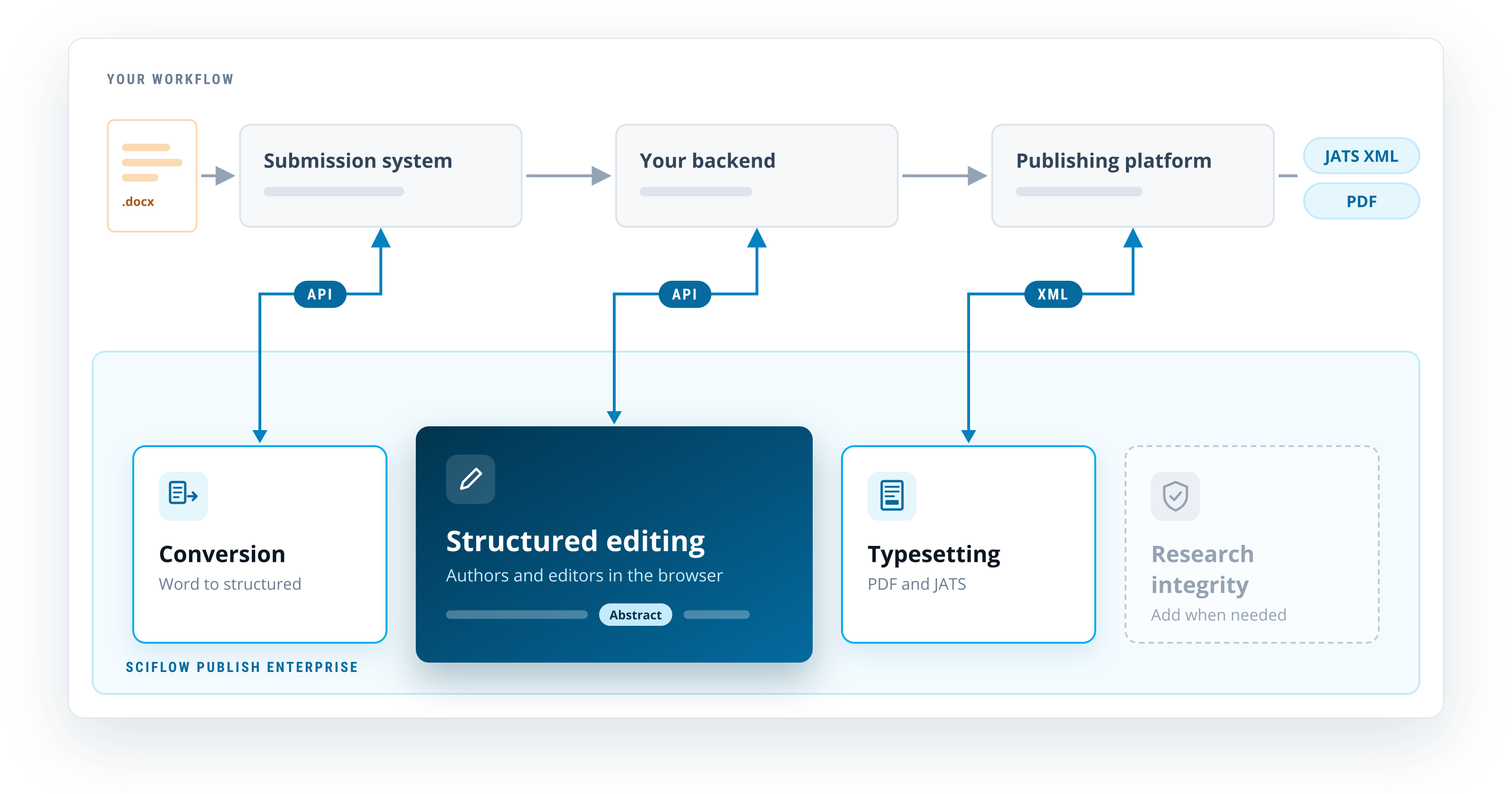
SciFlow Publish Enterprise supports publishers who need components within a larger workflow. Connect manuscript conversion, structured editing, or typesetting through API and XML interfaces. Run research integrity checks in the editor or through an API in your own backend, using structured manuscript data as the input.
Start with a specific production task. Tell us what arrives, which systems handle it, and what must leave the process. Together, we identify the relevant components and integration points: without replacing your stack, and without the cost of a full migration.
Let's talk
Talk to our team about your journal or book: the manuscript you start with, the formats you need, and how production fits your existing editorial workflow.